
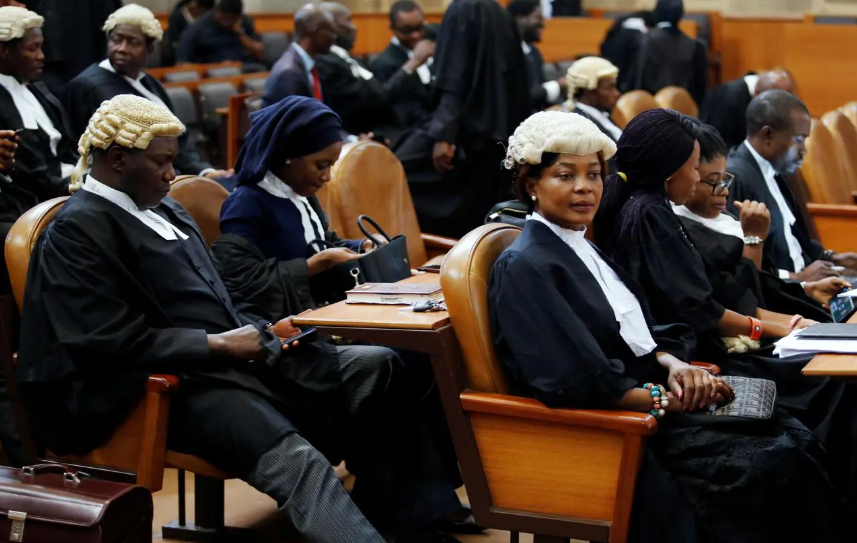
If you’ve been seeing conversations online about the Supreme Court “banning” the use of “Barrister”, you are not alone. Many people have been asking the same question: Are lawyers no longer barristers?
The simple answer is No.
The Chief Justice of Nigeria, Justice Kudirat Kekere-Ekun, has directed lawyers and court officials to stop using “Barrister” as a title before their names in official dealings with the Supreme Court.
The directive, which was conveyed in a memorandum signed by the Chief Registrar of the Supreme Court, is aimed at promoting professionalism and uniformity in the court’s official processes.
So, what exactly has changed?
The Supreme Court is not saying lawyers have lost their status as barristers.
Every person called to the Nigerian Bar remains a Barrister and Solicitor of the Supreme Court of Nigeria. That legal qualification is still intact.
What the court is saying is that “Barrister” should not be used as an honorific title before a lawyer’s name in official Supreme Court documents.
For instance, instead of writing:
- Barrister Ofa Joseph
the preferred style is:
- Ofa Joseph, Esq.
This is why you will notice lawyers use “Esq.” after their names rather than placing “Barrister” before them.
It is also worth noting that “Esq.” is short for “Esquire.”
It is a post-nominal title traditionally associated with members of the legal profession.
In Nigeria, lawyers commonly use “Esq.” after their names to indicate that they are qualified legal practitioners.
So, instead of writing “Barrister Ofa Joseph,” the preferred style is “Ofa Joseph, Esq.”
Interestingly, this is not an entirely new position. Years ago, in Nigerian Bar Association v. Ofomata (2017) 5 NWLR (Pt. 1557) 128, the court described the use of “Barrister” as a title before a lawyer’s name as unprofessional and improper.
The latest directive simply reinforces that position, particularly in relation to official dealings with the Supreme Court.
Furthermore, the directive does not mean lawyers can no longer describe themselves as barristers.
A lawyer can still accurately say, “I am a Barrister and Solicitor of the Supreme Court of Nigeria.”
The issue is only with using “Barrister” as a prefix before the person’s name in official court documents.
At first glance, the change may seem minor, but the Supreme Court believes professional titles should follow accepted conventions.
In an institution where precision, order and professionalism are highly valued, even the way lawyers write their names matters.
So, if you’re a lawyer preparing documents for the Supreme Court, the style to adopt is:
Ofa Joseph, Esq. and not Barrister Ofa Joseph.
The directive is about professional etiquette, not about taking away anyone’s qualification as a legal practitioner.